A Nurse Threaded a Catheter Through My Penis at 3AM — And It Was the Best Thing That Ever Happened to My Prostate
And the simple reason why no urologist in America told me the truth about what was really strangling my prostate.
I did everything right.
Every prescription. Every refill. Every single pill — swallowed on schedule, exactly like my urologist told me.
Tamsulosin first.
Then Alfuzosin when that stopped working.
Then Silodosin.
Then Finasteride — the one that killed my sex drive so badly my wife Linda thought I didn't love her anymore.
Three years. Four different drugs.
And you know where all that “doing everything right” got me?
Face-up on a gurney at 2:47 AM…
Gripping the side rails so hard my knuckles went white…
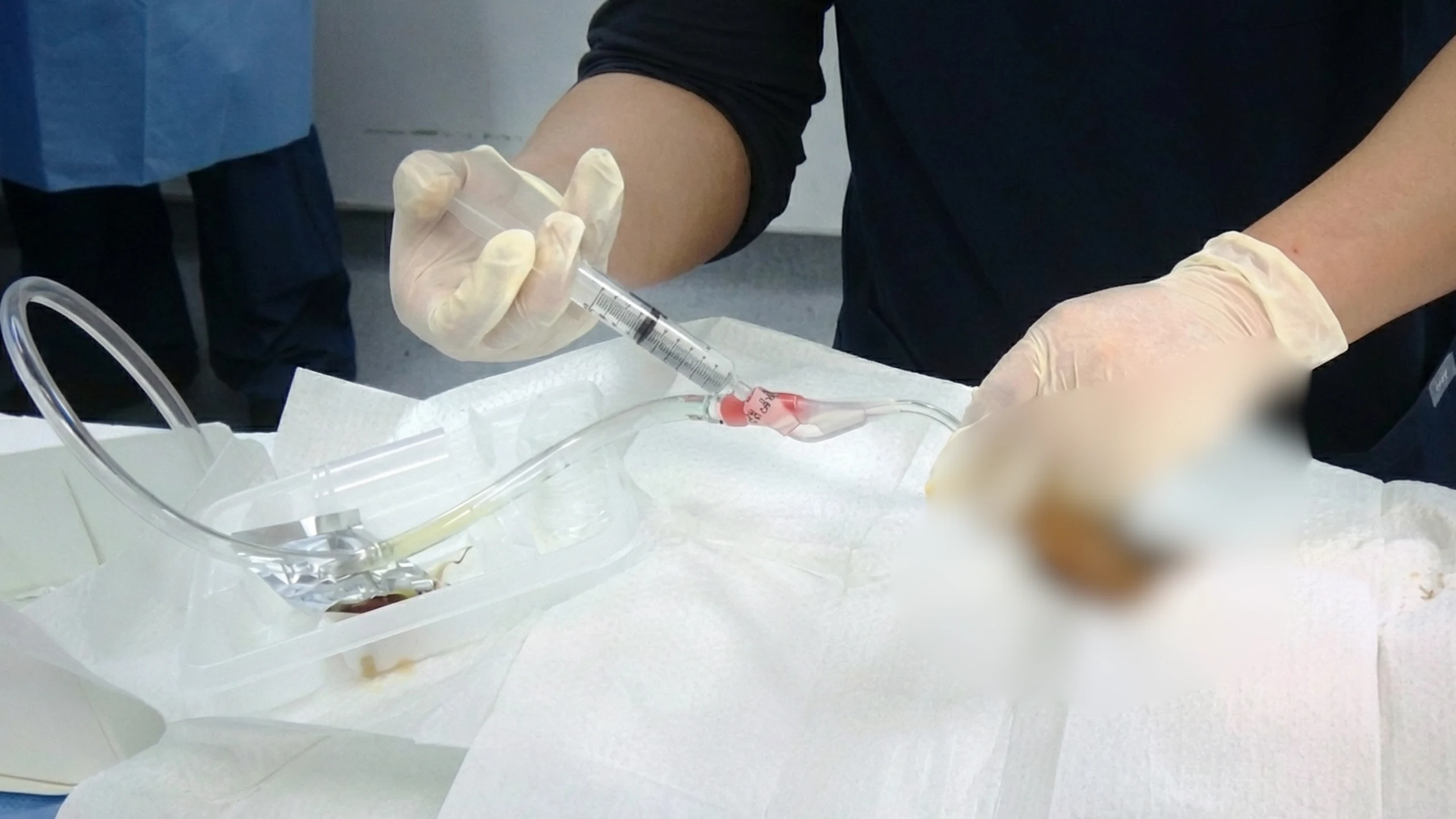
While a nurse threaded a rubber catheter through my penis and into my bladder.
I’m not going to sugarcoat what that felt like.
It felt like someone feeding a burning garden hose through the most sensitive part of my body.
I clenched my jaw so hard I thought I’d crack a tooth.
And when the tube finally reached my bladder and 900 milliliters of trapped urine started draining into a bag — almost a full liter that my body couldn’t release on its own — the nurse looked at the collection bag and just said:
“Acute urinary retention.”
Like it was routine.
Meanwhile, Linda was crying in the plastic chair in the corner.
And all I could think — through the pain, through the humiliation of lying there with a tube hanging out of me — was how the hell did I end up here?
I did everything my doctor said.
Every. Single. Thing.
Seven Days With a Bag Strapped to My Leg
They sent me home with the catheter still in. Said my bladder needed time to recover from being that full for that long. Seven days minimum.
You want to know what that week was like?
I shuffled around the house in sweatpants with a plastic bag strapped to my calf, trying not to let the tube pull.
Linda had to help me empty it the first two times because I couldn’t bend down far enough without the thing shifting and sending a jolt of pain through me that made my vision go white.
I canceled lunch with my buddy Pete because I couldn’t figure out how to sit in a booth without the bag showing.
I stood in the shower and cried — not dramatic, movie crying. Just standing there, water running over me, tears mixing in, thinking:
I am sixty-three years old and I cannot piss on my own.
I didn’t leave the house for five days.
Linda brought me meals on the couch. She didn’t say much.
But I caught her looking at me sometimes with this expression I’d never seen before — like she was watching me disappear.
That question haunted me the entire week. Not just “how did I end up here” but something worse:
What if this is just how it goes from now on?
But that week — the worst week of my life — is also what led me to a conversation that changed everything.
Because it turns out the pills weren’t just failing to fix my prostate.
They were hiding the real reason my prostate was destroying my life.
The Doctor Who Almost Didn’t Tell Me
Two weeks after my ER visit, I went back for a follow-up. Catheter was out by then, but I was still getting up four, five times a night.
Still couldn’t make it through a car ride without mapping out gas stations. Still felt like my body was broken and nobody could tell me why.
My usual urologist was on vacation. So I got a different doctor — older guy, maybe mid-sixties — named Dr. Michael Thompson. Semi-retired. Only working two days a week at the practice.
He looked at my chart for a long time. Flipped back and forth between pages. Then he put the folder down and got quiet.
I could tell he was deciding something.
Finally he said: “Has anyone ever explained to you why these medications stop working?”
I just stared at him.
He hesitated again.
Then he said — almost like he was talking to himself as much as to me — “I’m probably not supposed to go into this. But I’ve watched too many men end up exactly where you are.”
He leaned back in his chair.
“Those medications aren’t treating the problem. They’re treating a symptom of the problem. And there’s a difference that changes everything.”
Then he pulled out a pen and started drawing on the back of my chart.
What He Drew on That Paper

He drew a circle — my prostate. Then he drew tiny lines running into it — the blood vessels that feed the gland.
“Your prostate is basically a sponge,” he said.
“It needs constant blood flow to stay healthy, to regulate its own size, to flush out the hormonal byproducts that make it swell.”
Then he started shading in those tiny blood vessel lines with his pen. Filling them in. Clogging them.
“Here’s what happens in men our age. Over years — decades, really — metabolic waste builds up inside the blood vessels that feed your prostate.
Hormonal byproducts. Oxidative debris. Inflammatory residue. It coats the inside of these tiny vessels like sludge in an old pipe.”
He tapped the drawing.
“Your prostate is literally suffocating. It’s not getting the blood flow it needs. So it swells. It presses on your urethra. And you can’t pee.”
I said: “But the pills — ”
“The pills relax the muscles around the prostate. That’s all they do. Tamsulosin, Alfuzosin — they’re muscle relaxers. They open the squeeze a little. Temporarily.
But they do nothing about the suffocation. Nothing about the sludge. So the prostate keeps swelling. The pills keep failing. And eventually —”
“You end up in the ER,” I said.
“You end up in the ER.”
He told me Finasteride works differently — it blocks the hormone DHT, which does slow prostate growth.
But it blocks DHT everywhere in the body. Which is why it killed my sex drive, thinned my hair, and made me feel like a fog had moved into my brain.
“You were putting out a house fire with a firehose pointed at the whole neighborhood,” he said.
I sat there for a minute processing that. And then something worse hit me.
If the sludge was the real problem — if my prostate had been suffocating this entire time — then every pill I’d swallowed for three years hadn’t just been useless.
It had been running out the clock. My prostate was choking off a little more every month, and I was taking muscle relaxers like putting a Band-Aid on a blocked artery.
Three years. Wasted. While the real problem got worse.
I asked him why nobody had told me this before.
He got quiet again. Then he said something I still think about.
“I presented research on prostate blood flow at a regional urology conference about three years ago. Studies out of Japan. Clinical trials in Europe. Published, peer-reviewed data.
A handful of doctors came up afterward and seemed genuinely interested.”
He shrugged.
“Nothing came of it. Nobody changed their protocols. Nobody followed up.
It just got absorbed into the noise — the way things do when there’s no drug company funding the next trial and no sales rep putting it on anyone’s desk.”
He wasn’t angry when he said it. He just sounded tired.
“There’s no prescription drug that restores prostate blood flow,” he said.
“So the research sits there. It’s not that anyone’s hiding it. It’s that nobody’s looking for it. The system doesn’t go looking for answers it can’t write a prescription for.”
That hit me hard.
Because it meant the answer had been out there — published, peer-reviewed, sitting in medical journals — while I was cycling through four different drugs and ending up in the ER at 3 AM.
Nobody hid it from me. The system just didn’t care enough to find it.
The Solution He Almost Kept to Himself
What Dr. Thompson found in the research was a handful of natural compounds — each backed by published clinical studies — that did what no prescription prostate drug does:
Actually clear the metabolic sludge from prostate blood vessels.
He didn’t list them out one by one. He grouped them by what they do:
The first group breaks down the sludge itself. The inflammatory buildup, the oxidative debris that’s been coating the blood vessels for years.
He said the lead compound here was Quercetin — and he cited a clinical study where 500mg twice a day for 8 weeks produced significant improvements in urinary symptoms and flow rate versus placebo.
“This is the drain cleaner,” he said.
The second group repairs and reopens the vessels. Once the sludge starts clearing, you need the blood vessels themselves to dilate and carry flow again.
Pine Bark Extract was the anchor here — a potent antioxidant that specifically supports vascular function. He said the research on this one was extensive.
The third group regulates the hormonal environment — without the nuclear option of Finasteride.
Beta-Sitosterol was the key. He said it had some of the strongest clinical data of anything he’d studied. Multiple studies showing it improves urinary flow and reduces residual volume — the urine left in your bladder after you think you’re done — without the hormonal devastation of prescription DHT blockers.
“It’s like the difference between loosening your belt when your pants are too tight… versus actually losing the weight,” he said.
He wrote down ten compounds total. Then he paused.
“I usually just give men the list and let them figure it out,” he said.
“But I’ll be honest with you — most of them give up after two weeks. It’s ten different bottles, different dosages, different quality levels. Nobody gets it right buying off the shelf.”
He told me a colleague of his had spent the last two years working with a small pharmaceutical-grade lab to combine all ten compounds into a single formula.
Clinical doses. Quality-sourced ingredients. Specifically designed for the prostate suffocation problem.
He wrote down the name on a piece of paper and handed it to me.
Part of me thought he was selling me something. I almost said so.
But then I remembered — this guy was semi-retired. Working two days a week. He had no reason to push anything on me. He looked like a man who was just tired of watching the same thing happen to every patient who walked through the door.
I went home and looked it up that night. The website was simple — almost too simple. No flashy graphics, no celebrity endorsements.
Part of me almost didn’t order it.
But I thought about that catheter. About Linda’s face in the ER. About the seven days with a bag on my leg.
I ordered three bottles.
It was called FlowRevive.

What Happened Over the Next Eight Weeks
I’m going to be honest about the timeline because I refuse to be one of those people who claims a miracle overnight.
Week one: Not much. Maybe I got up three times instead of four one night. Maybe not. Hard to tell.
Week two: Something shifted. I was standing at the toilet on a Tuesday morning and realized I’d actually finished. Not the usual stop-start-dribble-wait-try-again. An actual, complete, normal piss. I stood there for a second afterward just… processing that.
Week three: Linda noticed before I said anything. She rolled over one morning and said, “You didn’t get up last night.” I said, “I got up once.” She said, “No. You didn’t.”
Week six: I went back to my regular urologist for a routine check. He ran the tests. Flow rate, residual volume, PSA.
He looked at the numbers. Looked at me. Looked back at the numbers.
“What are you doing differently?”
I told him. He didn’t love hearing it. But the numbers were the numbers.
My flow rate had nearly doubled since my last visit. My residual volume — the urine left behind after voiding — had dropped from 140ml to under 30ml. My PSA had come down.
He wrote it all in my chart without saying much.
But the numbers didn’t lie.
I’m Not the Only One
After what happened, I started telling friends. Quietly, the way men do — standing by the grill, leaning against the truck at a tailgate, conversations you have when wives aren’t within earshot.
A few of them tried FlowRevive. Here’s what they told me:
Frank, 67 — Albuquerque, NM
“My wife ordered it without telling me. Put two bottles on my nightstand and said ‘just try it or I’m scheduling you for the surgery.’ Eight weeks later my doctor canceled the surgery consult. I’m sleeping through the night for the first time in four years. That’s all I got to say about it.”
Dennis, 71 — Knoxville, TN
“I tracked everything. Before: flow rate 8.2 ml/sec, residual volume 165ml. After 90 days: flow rate 17.4 ml/sec, residual 22ml. My urologist asked what I was doing. I showed him the bottle. He said, ‘Whatever it is, don’t stop.’”
George, 59 — Tampa, FL
“I’ll tell you the moment I knew. My wife reached for me one morning in bed and I didn’t flinch. Didn’t worry about needing to stop halfway through. Didn’t worry about whether things would work the way they used to. We just had a morning like we used to have. And neither of us said a word about it after. We didn’t need to.”
Ray, 74 — Billings, MT
“I almost sent it back. Week three, nothing. I told my wife it was snake oil and I wanted my money back. She said give it another month. I don’t know why I listened, but I did. By week seven I drove to my son’s house in Bozeman — three hours, no stops. Used to map out every rest area like I was planning a damn military operation. Now I just drive. I owe my wife a steak dinner for hiding that return label.”
Standing at a Urinal in an Applebee’s
I know that’s a weird thing to say changed my life.
But about three months after starting FlowRevive, I was out to dinner with Linda and another couple. Excused myself to use the restroom. Walked up to the urinal. And I just… went.
Full stream. No waiting. No straining. No standing there while the guy next to me finishes, flushes, washes his hands, and leaves while I’m still trying to get started.
Done in twenty seconds. Washed my hands. Walked back to the table.
And it hit me: I wasn’t thinking about it anymore.
I wasn’t planning around it. Wasn’t mapping bathrooms. Wasn’t timing my water intake.
Wasn’t waking Linda up four times a night. Wasn’t dreading long car rides or movie theaters or church.
I just had a normal piss at an Applebee’s and it almost made me emotional.
That’s what this problem takes from you. Not just sleep. Not just comfort. It takes the ability to live without thinking about your body every single hour.
I got that back.
What That Could Look Like for You
Think about it for a second.
Sleeping through the night — the whole night — and waking up because the sun’s coming through the blinds instead of because your bladder’s screaming at you at 2 AM.
Driving to your grandkid’s baseball game without quietly cataloging every gas station on the route. Just driving. Windows down. Radio on.
Sitting through an entire movie with your wife without that creeping pressure that makes you miss the third act of everything you’ve watched for the last five years.
Standing at a urinal and being done before the guy next to you. Not after. Not long after. Before.
Going to bed and not thinking about your prostate at all — and only realizing it the next morning when you wake up rested, comfortable, and your wife is still asleep because you didn’t wake her up three times.
That’s not a fantasy. That’s a Tuesday for me now.
And the only difference between where I am and where you are right now is eight weeks and a decision.
If You’re Still Reading This
You probably recognize some of what I went through. Maybe all of it.
I don’t know how many pills you’ve tried, or how many times you’ve gotten up tonight already, or whether you’ve had your own ER visit or you’re just quietly terrified that one’s coming.
Here’s what I can tell you about FlowRevive, and then you can decide for yourself.
It’s ten clinically researched compounds — combined at the doses used in actual peer-reviewed studies — formulated to address prostate suffocation.
Not just the symptoms. The blood flow problem underneath that’s been strangling your prostate for years while your pills pretended everything was fine.
Three capsules with your morning coffee. One with each meal if you prefer to split them up. That’s it. No complicated timing, no pill organizer that looks like you’re checking into assisted living.
Here’s how the pricing works:
The six-month plan is $39 a bottle. That’s less than my Tamsulosin copay used to be — for something that actually addresses the root problem instead of masking it.
A three-month supply — which is what Dr. Thompson recommended to give the compounds time to build in your system — comes out to $49 a bottle.
A single bottle is $59 if you just want to see what happens. I get it. I was skeptical too.
Every option comes with a 90-day money-back guarantee. Use it. Try it.
If you’re not sleeping better, peeing better, and feeling like your body actually works again — send it back and get every penny refunded. I wish my urologist had offered me that kind of deal before putting me on Finasteride for two years.
Here’s the thing I want you to sit with tonight.
Every night you get up three, four, five times — that’s another night your prostate is suffocating.
The metabolic sludge in those blood vessels isn’t waiting for you to make a decision. It’s building. Quietly. The way it’s been building for years.
The pills aren’t clearing it. Your body can’t clear it on its own.
And the longer you wait, the more your prostate swells, the harder your bladder has to work, and the closer you get to your own version of my 3 AM gurney.
I’m not trying to scare you. I’m telling you what I wish someone had told me three years and four failed prescriptions ago.
I spent three years doing everything my doctor said and ended up on a gurney at 3 AM with a tube in my body and my wife crying in the corner.
Eight weeks of FlowRevive gave me back the life those pills were supposed to protect.
I’m not telling you what to do. But I’m telling you what I’d do if I could go back to that first urologist appointment and start over.
It wouldn’t be the pills.
Take care of yourself.
— Robert